ILLUSTRATION: ©La Tribune
On 29 August, La Tribune published an article on the outcome of the public consultation organised this summer by the Pyrénées-Orientales Departmental Council regarding a possible name change for the region. Christophe Alaux, Director of the Chair in Attractiveness and New Territorial Marketing (IMPGT – Aix-Marseille University), was asked to shed light on the territorial marketing issues raised by this initiative.
A consultation with a close result
Between 22 June and 15 August, residents of the Pyrénées-Orientales were invited to vote on three options: to retain the current name, or to opt for ‘Pyrénées Méditerranée’ or ‘Pyrénées Catalanes’. This initiative was in response to a campaign promise made by the President of the Departmental Council, Hermeline Malherbe, who wished to bring the region’s name into line with its Catalan identity.
Out of 38,178 votes cast, the current name ultimately won with 47.21 per cent of the vote, ahead of ‘Pyrénées Catalanes’ (42.15 per cent) and ‘Pyrénées Méditerranée ’ (10.64 per cent) – a close result which, according to Hermeline Malherbe, nevertheless demonstrates a strong attachment to the region’s Catalan identity.
The name: an established brand asset
When asked about the real impact of such a change, Christophe Alaux pointed out that the issue of identity must not overshadow the reputation the region has already built up. Drawing on the ©IMAGETERR study, conducted every two years by the Chair amongst 3,200 French people regarding their preferred holiday destinations, he emphasised that the Pyrénées-Orientales are among the most frequently cited regions – just behind Provence and Finistère, and ahead of Morbihan and Aix-en-Provence – evidence of spontaneous recognition and a brand that is already well established.
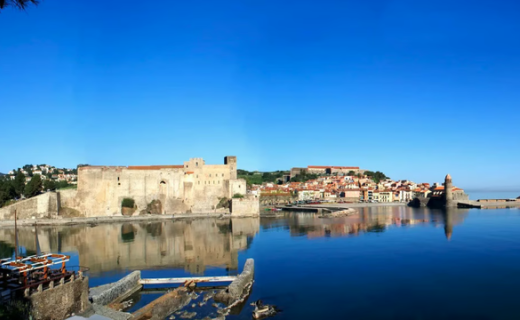
It also points out that economic stakeholders and investors base their decisions primarily on concrete fundamentals: the market, land, labour force – rather than the administrative name of a department, and that, in the context of tourism, it is often sub-departmental brands (such as Collioure or Banyuls, in this case) that drive a region’s appeal.
A recurring issue, rarely resolved without controversy
The article places this episode within the broader history of attempts at territorial renaming in France: from Mayenne-et-Loire, which became Maine-et-Loire in 1791, to the Côtes-du-Nord, renamed Côtes-d’Armor in 1990, including resounding failures such as ‘Septimanie’, proposed without consultation by Georges Frêche in 2004, or ‘Montpellier Unlimited’ in 2012. These examples all illustrate the difficulty of reaching a consensus on a regional name, and the importance of linking any branding project to a substantive strategy rather than to a single communication campaign.
Our readers are also interested by

Study Tour du Master 2 ANMT

La Boussole de l’équilibre territorial mobilisée lors d’un Café Ambassadeur de Reims Légend’R

Comité d'orientation 2025

Le tourisme, désormais au cœur de l’attractivité territoriale : une intervention de Christophe Alaux