SUMMARY
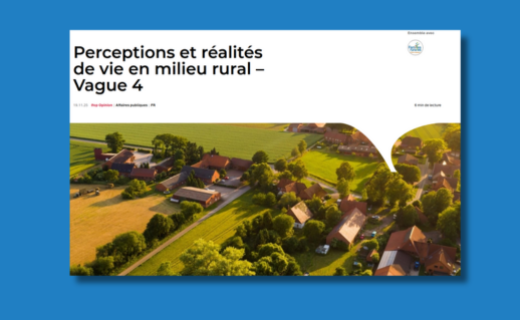
This Ifop barometer for Familles Rurales (October 2025) is the fourth wave of a benchmark study analyzing perceptions and realities of life in French rural areas. It offers an in-depth diagnosis of theimage of rural life, revealing a marked duality between an ideal of sustainable living and a growing sense of structural fragility.
The study is carried out by Familles Rurales, an association recognized as being in the public interest, which works on behalf of families throughout France, mainly in rural and suburban areas. It was carried out by Ifop online from June 25 to July 2, 2025, among a representative sample of 1,002 French people and 1,504 rural people, using the quota method.
Keywords: countryside, decline, medical desertification, dynamism, territorial equality, 2026 municipal elections, employment, local associative involvement, obstacles to settlement, brand image, social ties, housing, rural mobility, nature, digital, purchasing power, quality of life, health, safety, public services
Illustration : Ifop ©
Key elements of the study
Since 2023, the study has adopted the INSEE definition of "rural areas" (communes with low or very low population density), replacing the former criterion of communes with fewer than 2,000 inhabitants. This clarification is crucial to the analysis of historical trends, as it enables a more accurate comparison of current territorial realities.
The publication highlights a number of key issues for regional strategy and positioning:
- Double-edged attractiveness: While 78% of the general public see the countryside as the ideal way to live, and 94% of rural dwellers consider it a pleasant place to live, the report highlights a sharp rise in the feeling of abandonment (59%) and decline (48%) among residents. This paradox calls for a shift from contemplative discourse to communication that reassures people of the real vitality of our regions.
- New levers of differentiation: In addition to the traditional advantages of peace and quiet, nature and quality of life, security is now a growing incentive for people to settle in rural areas. At the same time, the digital barrier is fading, as progress in Internet access and telecommunications is widely recognized by residents.
- Addressing structural barriers: To attract and retain people, particularly young people (aged 18-24) who find it difficult to stay in rural areas, the report identifies urgent priorities for action: combating medical desertification (cited by 72% of rural residents as having worsened) and maintaining local public services.
- The economic challenge of mobility: Dependence on the private car remains a critical issue, with 63% of rural dwellers spending more than €70 a month on transport, which has a major impact on their purchasing power.
- The strength of local social capital: The report reveals that rural people's commitment is deeply rooted in the local community, with 52% of them acting first and foremost to energize their own territory. This commitment to local community life is a major lever for strengthening social ties and supporting local initiatives.
In short, this report provides the data needed to adjust territorial promises to citizens' real expectations, while identifying the priority areas for action to guarantee sustainable territorial equality.