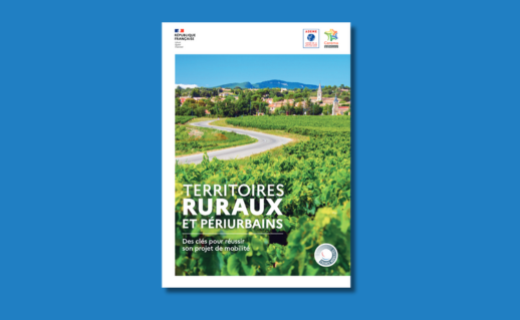
SUMMARY
In low-density areas, congestion is low, public transport is infrequent and housing and employment are dispersed. As a result, the vast majority of journeys are made by private car (80%). Yet there are tools and structures in place to develop more sustainable mobility in rural and peri-urban areas. This book, based on experiments carried out by 180 territories from 2018 to 2022 as part of the TENMOD call for expressions of interest, presents the lessons learned from this feedback and highlights recommendations for successfully carrying out a local mobility project.
Keywords: carsharing, case studies, carpooling, mobility, soft mobility, mobile services, rural areas, peri-urban areas, transport, transport on demand, public transport, multimodal transport, solidarity transport, car, France.
Illustration : © ADEME x Cerema
Third key success factor: raising awareness of the project and changing mobility practices
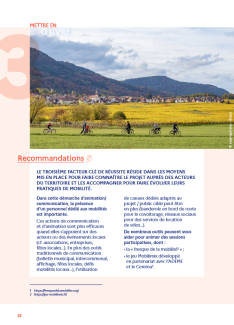
ADEME x Cerema_Mobilité territoires ruraux périurbains_1.png
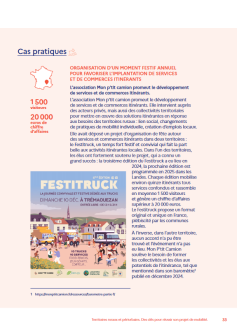
ADEME x Cerema_Mobilité territoires ruraux périurbains_2.png
To find out more :
Our publications on the same subjects
Report | "Evaluation of the externalities generated by tourist mobility in France up to 2030" - ADEME
Report | "Evaluation of the externalities generated by tourist mobility in France up to 2030" - ADEME
In Austria, public transport services have been adapted to the rural nature of the country

In Austria, public transport services have been adapted to the rural nature of the country
The "Léman Express" to organize mobility in the cross-border conurbation of Greater Geneva